

30/03/26
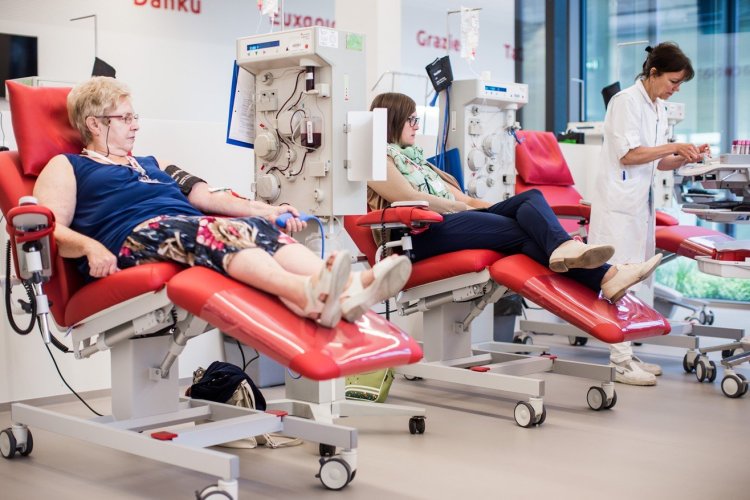
Globally, tens of millions of donors provide approximately 118.5 million whole blood donations each year. These donations are of utmost importance to maintain the blood supply, used for a wide range of clinical applications such as emergency blood transfusions. A possible strategy to maintain blood levels is to increase the donation frequency of existing donors. But at what frequency can donors safely donate whole blood without any adverse effects on their own health? That was the question we tried to answer in one of our recently published systematic reviews.
A systematic search in three databases resulted in four records on three randomized controlled trials (RCTs), investigating the impact of increased donation frequency on adverse events, iron status, and haematological parameters in whole blood donors.
The key findings of our systematic review were:
When interpreting these results, it is important to consider that the identified evidence was of low to very low certainty, due to limitations in study design and imprecision. Therefore, future high-quality RCTs, comparing shorter to longer inter-donation intervals over a longer period of time, are needed to confirm these results and to identify the most optimal inter-donation intervals for both men and women, balancing the stability of the blood supply and the health of the donor.
Read the published full systematic review in Vox Sanguinis.
