

15/07/26
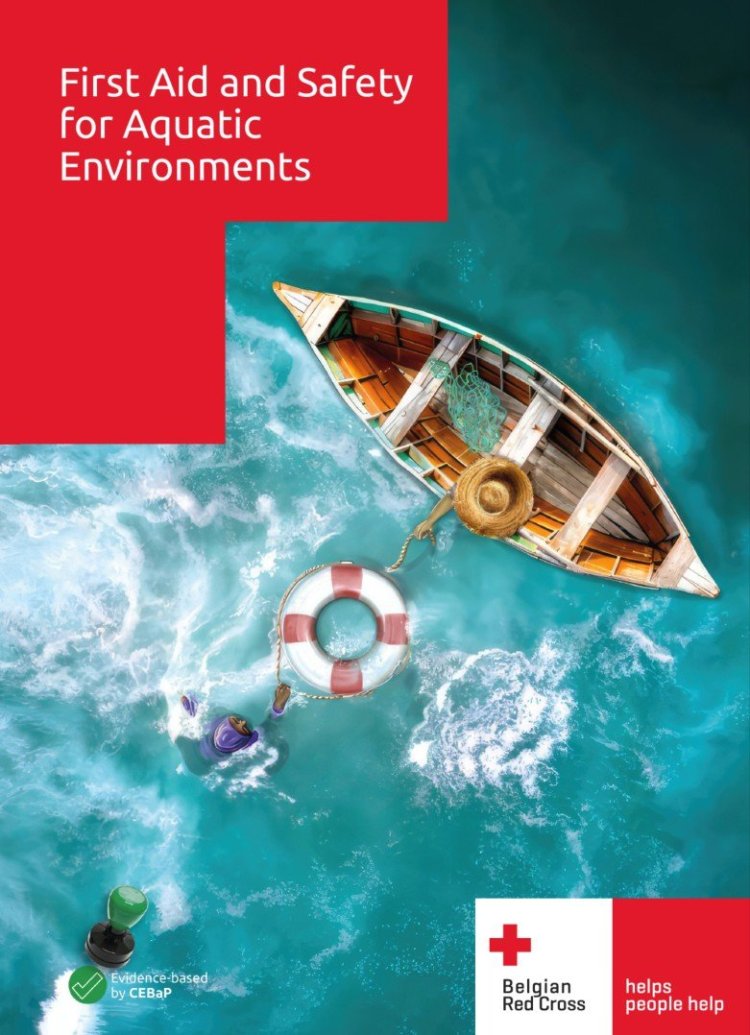
25th July marks World Drowning Prevention Day, a crucial day to raise awareness on drowning as a major public health issue. While drowning mortality rates decrease, progress remains uneven: in Europe, the rate has dropped by 68% since 2000, but in Africa – where the highest rates are recorded – the rate has dropped by only 3%.
The First Aid and Safety for Aquatic Environments (FASAE) manual by the Belgian Red Cross-Flanders (BRC-F) addresses this gap by focusing on prevention and first aid in and around aquatic environments in low-income settings. Over the course of 1.5 years, the manual was developed using our established evidence-based approach, consisting of:
The manual serves as a comprehensive reference guide for first aid providers in aquatic environments in Sub-Saharan Africa and is currently being used in a collaborative Training-of-Trainers program between BRC-F and CVM. Experienced first aid instructors train national Red Cross/Red Crescent societies, so that they, in turn, can train local first aid providers.
You can request a free copy of the manual in English or Portuguese here.
(*) One of these research questions – on basic swimming and water safety skills training for drowning prevention – was developed into a full systematic review.
