

07/07/26
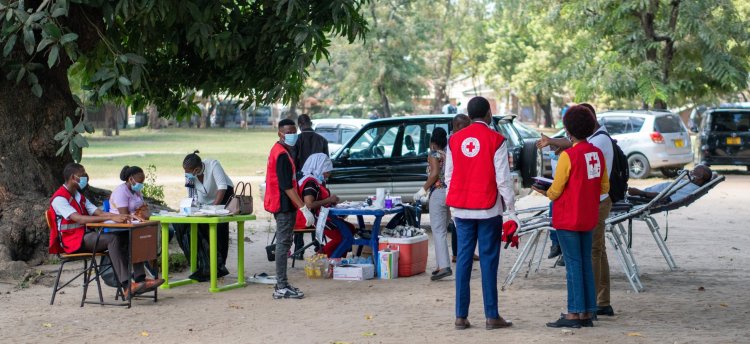
Several regions in Tanzania currently do not collect sufficient blood to meet the demand. In addition, the share of voluntary unpaid blood donors is low, and retaining blood donors is difficult. Since there is limited scientific evidence on the factors influencing donor recruitment, donor retention, and blood safety in Tanzania, a cross-sectional study was set up by CEBaP and the International Department of Belgian Red Cross-Flanders, in collaboration with the Tanzania Red Cross Society.
In 2023, 1471 (candidate) blood donors were surveyed at 43 mobile blood collections of the Tanzania Red Cross in five regions. Participants were asked about their sociodemographic characteristics, donation history, motivating factors, received incentives, and the ways in which they were recruited. After adding test results for transfusion-transmitted infections (TTI), the dataset was anonymized and delivered to CEBaP.
Our analysis on a dataset of 675 participants revealed that:
This study, that was published in Vox Sanguinis, revealed multiple important predictors of pre-donation deferral, retention and TTI rates in Tanzanian (candidate) blood donors. More research is needed to determine the best ways to recruit and retain blood donors and to explore whether focusing on specific groups could help ensure a more stable blood supply in Tanzania.
