

08/04/26
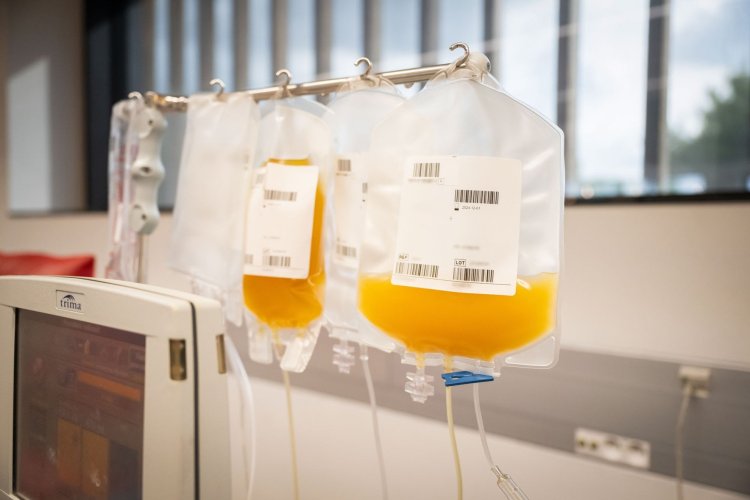
Belgian Red Cross-Flanders is responsible for collecting, processing and distributing platelet products in Flanders. Platelets transfusions are widely used in several clinical areas, including haematology, oncology, internal medicine and intensive care among others, to prevent or treat bleeding. Responsible and well-informed use of platelets is essential for both safe patient care and a sustainable donor system. That is, due to their short shelf life (around five days), availability of platelets is limited. At the same time, each platelet transfusion is associated with a risk of adverse reactions. Clinical decisions on platelet transfusion should therefore be guided by the most recent evidence-based guidelines. However, international audits have consistently shown that platelets are regularly transfused outside of clinical practice recommendations.
To support evidence-informed decision-making in platelet transfusion practice, we collaborated with the Haematology department of the University Hospital Leuven to conduct a systematic review of clinical practice guidelines (CPG) on platelet transfusion in non-surgical, non-traumatic care settings, and appraise their methodological quality.
We searched three scientific databases (PubMed, Embase and the Transfusion Evidence Library) and eight grey literature sources for CPGs published between January 2015 and June 2025. Recommendations on platelet transfusion were extracted, along with information on the target clinical population, target age group, the transfusion indication (i.e. prophylactic/therapeutic transfusion), the direction of the recommendation, the strength of the underlying evidence and the strength of the recommendation. Guideline development quality was assessed using the AGREE II Rigour of Development domain.
We identified 30 CPGs, formulating a total of 89 recommendations on platelet transfusion in diverse clinical populations (e.g. bone marrow failure, immune thrombocytopenia, platelet function disorders). Three interactive evidence maps were created to map recommendations by target population (columns) and transfusion indication (rows). Each map is segmented according to a different characteristic: the target age group, the strength of the recommendation, and the rigour of guideline development.
Our interactive evidence maps can provide clinicians with an accessible overview of available CPGs on platelet transfusion, and can serve as a key resource to guide evidence-based clinical decision-making. In addition, these maps highlight priority areas for future guideline development and primary research. Our review also underscores the need for rigour and transparency in the guideline development process, to ensure that CPGs are reliable and trustworthy.
Read the full article, published in Blood Reviews, here.
